
The freedom to let technology act for us
Useful delegation should give us more attention for the life around us. That depends on clear permission, reliable follow-through and respect for our own judgement.
Samuel Collett, Founder of HoWA··4 min read

A suggestion can be useful and still leave you with all the work. You know what needs changing, but must contact the provider, find a suitable time, explain the circumstances and check that somebody has actually agreed. The answer was the beginning of the task.
This is why I keep returning to the relationship between insight and action when describing HoWA. Understanding a situation should make the next step easier to carry through. Otherwise, the person remains responsible for translating every useful thought into another sequence of instructions.

I am interested in how much of that coordination we could sensibly delegate, and what that would make room for. An evening repeatedly interrupted by unfinished arrangements can be difficult to enjoy. Useful assistance should help us be more present in the life those arrangements are meant to support.
Knowing what has been agreed
Imagine telling an assistant that you will be away for a few days. In a future with suitable connections, it could help identify arrangements that may need attention: a delivery, a visit or work planned at the home.
That is useful insight. It is also incomplete. Some arrangements may need changing; others may need to continue. Someone else may still be at home. A detail that seems obvious to the system could be the very detail it has misunderstood.
The next step should make those differences clear. What does the assistant propose? What can it actually change? Which decision belongs to you, and which can it carry out under an instruction you have already given?
I find this a more useful way to discuss autonomy than treating it as a single setting. Different tasks deserve different degrees of freedom. Repeating a familiar arrangement within agreed limits is a different responsibility from selecting a new provider or making an unfamiliar purchase.
Researchers have been examining these questions alongside the technical progress. Google DeepMind's 2024 work on advanced AI assistants discusses how greater autonomy increases the consequences of misunderstood instructions and why assistants should preserve the user's agency. For me, that becomes a product question: can a person give useful authority without surrendering the ability to understand and change what happens? [2]
Permission should be understandable
A standing instruction ought to be something a person can describe and inspect. It might identify an agreed task, suitable times and a spending limit. It should also establish when the system needs to come back for a decision.
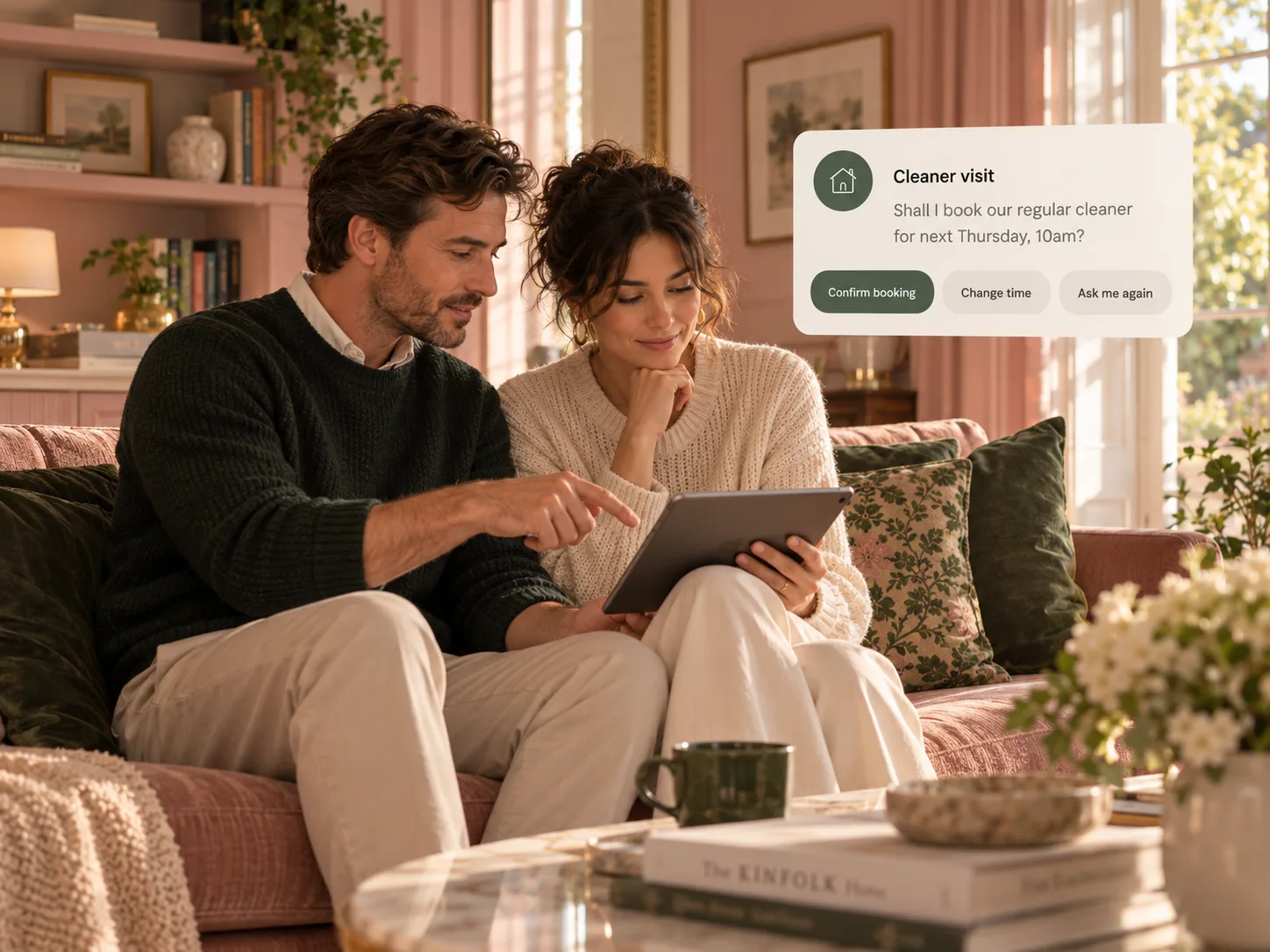
People should be able to revise that instruction as their circumstances change. A preference for mornings is not permission to rearrange an appointment. Remembering a budget does not confer authority to spend it. Knowing someone's taste should help prepare a choice, while leaving them free to make it.
I want those distinctions to feel ordinary in the experience. A household should be able to see what it has asked for and what remains its decision, without having to understand the machinery underneath.
The same care applies to other people. One household member's convenience does not create authority over another person's information or commitments. Shared living requires attention to who is affected by an action, as well as who requested it.
This is also where a business has to be honest about the reach of its connections. Preparing a request, sending it and receiving confirmation are different achievements. A reassuring sentence should never conceal the gap between them.
The outcome matters as much as the instruction
If technology is to take work off someone's hands, it must make the result understandable. Was the change accepted? Did the original arrangement remain in place? Is somebody waiting for a response? Has the system reached the limit of what it can do?
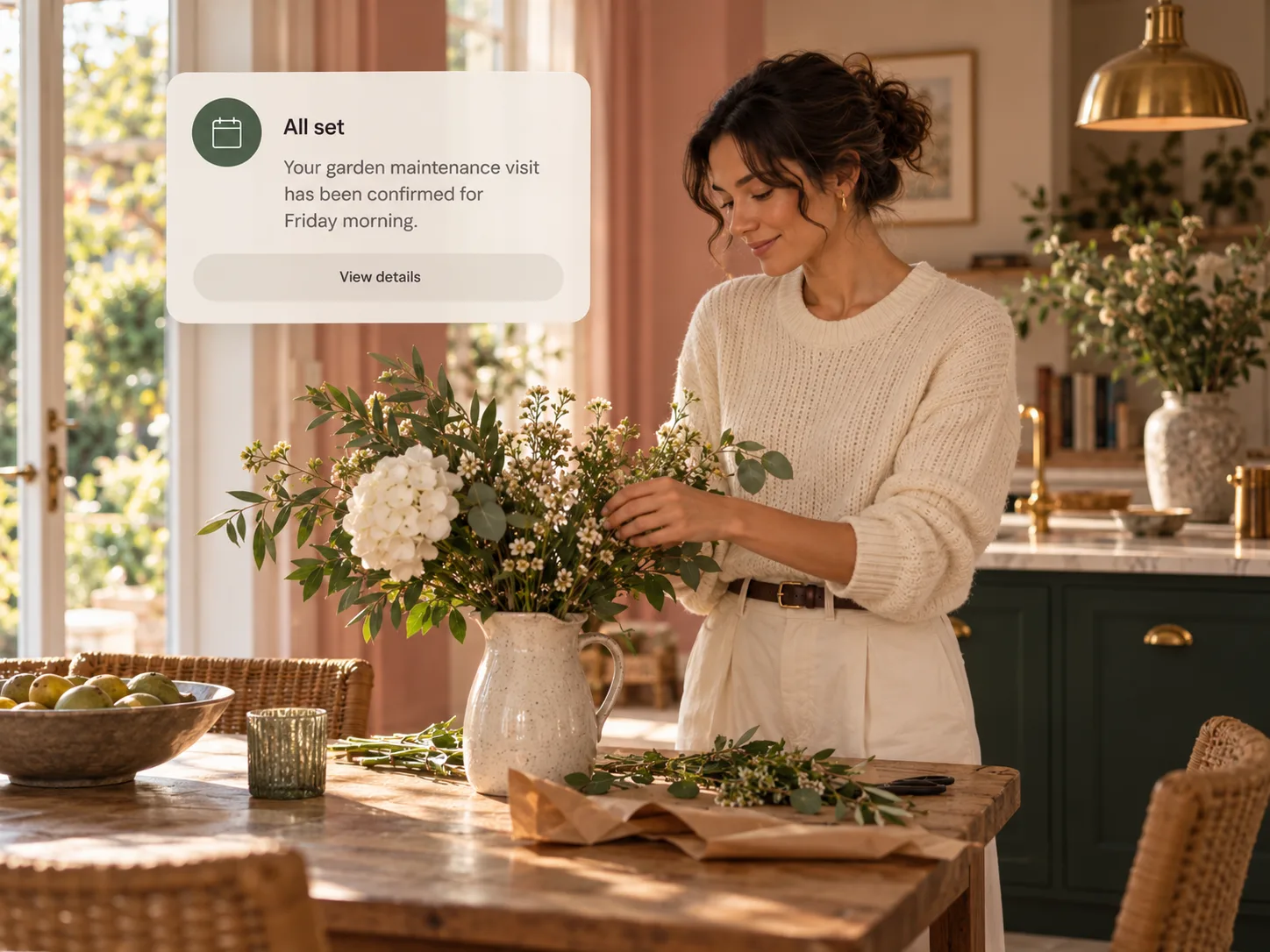
Failed and unfinished actions deserve as much clarity as successful ones. I would rather know that something needs my attention than discover later that a confident response described an intention.
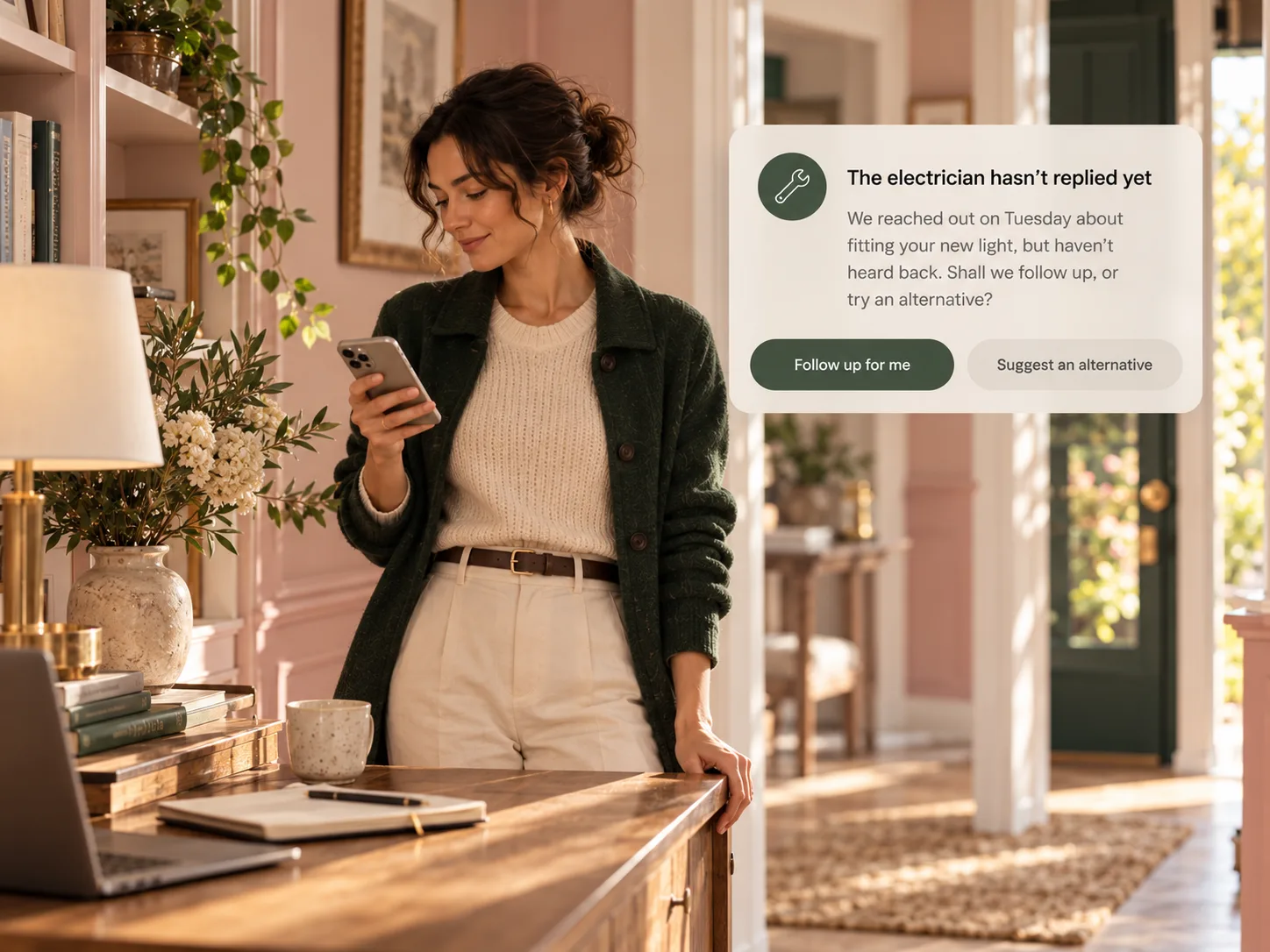
For HoWA, the longer-term ambition is to connect the understanding behind an action with the outcome that comes back. That could make the next interaction more useful. It also means we need to earn each new ability through working connections, clear authority and reliable follow-through. The complete picture will develop in stages.
There is no universal appetite for delegation. Some people will want close involvement. Others will be comfortable giving a well-defined task more freedom. A useful product should allow those choices to develop through experience, rather than assume that the greatest amount of automation is always the best outcome.
The freedom I am interested in is practical and personal: trusting a responsibility to something else, knowing it has been handled and being able to give our attention elsewhere. That might mean time around a table, working on a room or enjoying a garden. Those ordinary pleasures are part of why the technology matters.

Sources
[2] Google DeepMind. The ethics of advanced AI assistants. 19 April 2024. Read the research overview