That Feeling You Call Home: Inside Talliston House & Gardens with John Tarrow
A House of Willow Alexander interview with John Tarrow of Talliston House & Gardens, exploring the feeling of home, the power of imagination and the 25-year transformation of an ordinary Essex house.
House of Willow Alexander·
What makes a house feel like home is rarely the thing we first describe. It is not only the address, the architecture, the size of the rooms or the furniture placed inside them. It is the sensation of being returned to yourself by a place. The feeling that a room understands what you came there to do. The sense that life, memory, work and imagination have found a setting that allows them to belong.
At Talliston House & Gardens in Great Dunmow, Essex, that idea has been taken further than most people would ever dare. What began as an ordinary three-bedroom semi-detached house became, over 25 years, one of Britain's most extraordinary homes: a sequence of rooms and gardens set in different countries, different centuries and different states of mind. It is not a conventional interior project. It is a life made architectural.
Its creator, author John Tarrow, describes the idea with striking simplicity: he took the house he could afford and built inside it “all the houses I wanted to live in”. That single sentence contains much of the Talliston story. It is practical and dreamlike at once. There was no inherited manor, no vast estate, no blank cheque, no easy route towards grandeur. There was a modest house in Essex, an imagination of unusual force, and a question that would eventually shape every room: how do you want to feel here?
The ordinary house that became a world
Talliston began on 6 October 1990, when John stepped into what he has called “the most ordinary house you could buy”: a three-bedroom semi-detached house in Essex. The ambition did not arrive fully formed. At first, there was no master plan to transform the entire house and gardens into a wonderland of imagined locations. The first idea was much smaller and, in some ways, more revealing.
He wanted the perfect place to write.
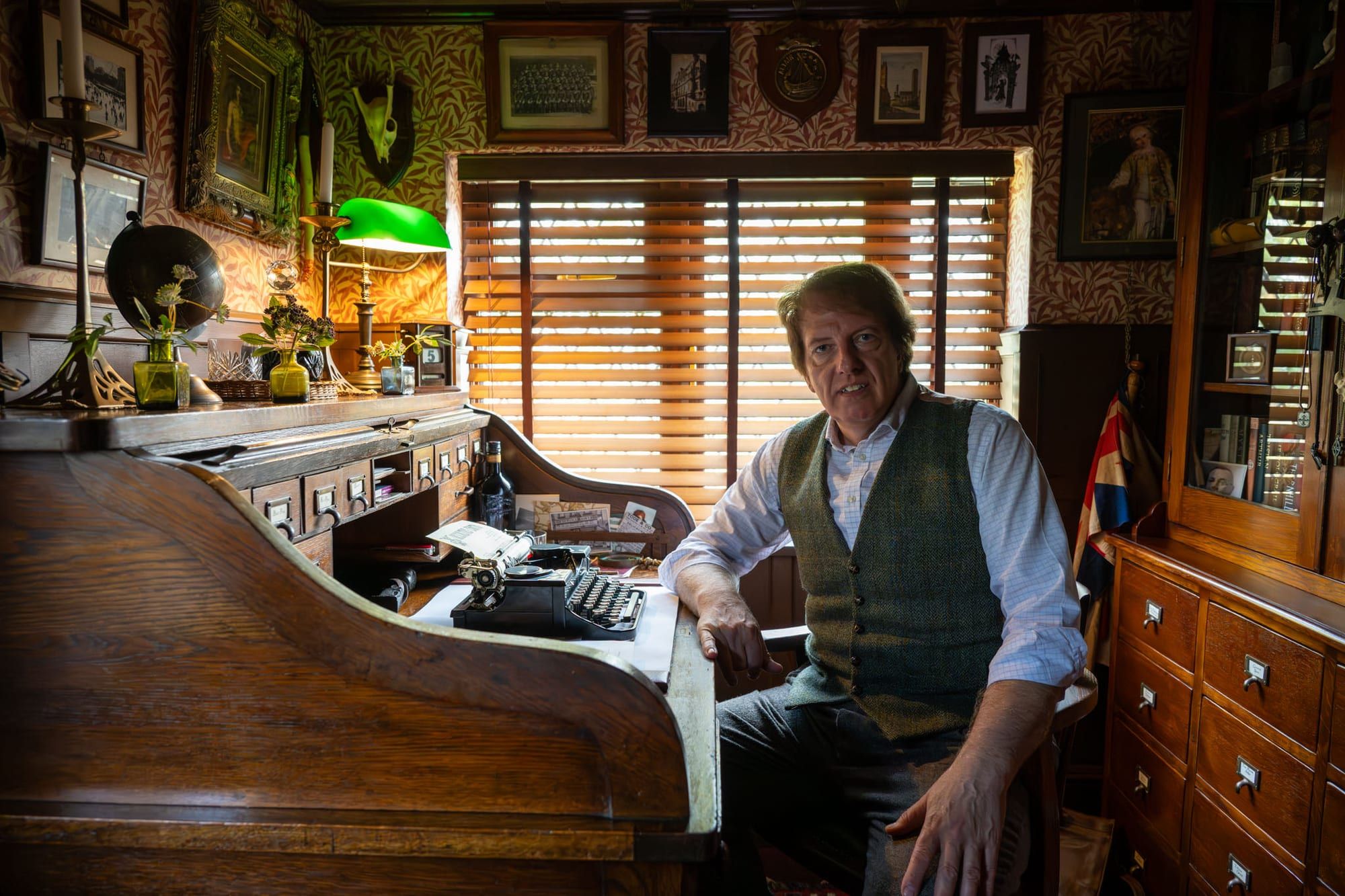
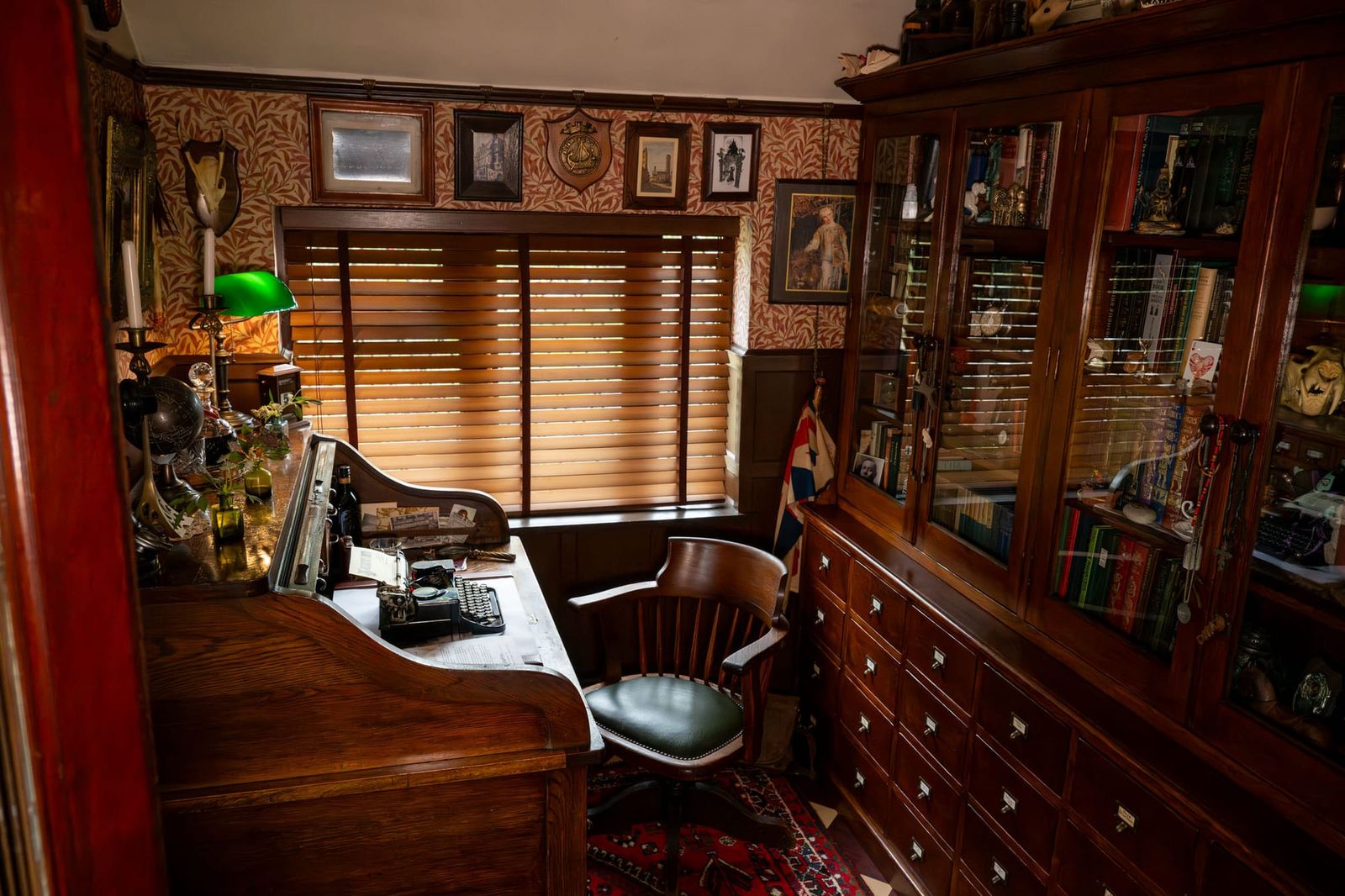
The first room was the box room. Inspired by 1920s and 1930s noir films and books, John and his father began creating an office that belonged to another mood and another time. It was not intended as theatre, at least not in the shallow sense. It was a room designed to make a person feel capable of doing the work they hoped to do there. As he recalls, once that office was made, friends, writers and artists encouraged him to continue. One room became another, and the project grew slowly from there.
That origin matters because Talliston is not a house built from display. It is a house built from need. The office gave John something that ordinary decoration rarely gives: permission. In that room, he felt able to write differently, to think differently, to inhabit the role of author with greater conviction. He has written six novels there, as well as the house's own non-fiction anniversary book. It remains, he says, the place to which he gravitates.
In that sense, Talliston's first lesson is not about maximalism, fantasy or period detail. It is about environment. The room around us changes the work we believe ourselves capable of doing.
The feeling of home as a perfect moment
When asked what the feeling of home means to him, John does not reach first for comfort or belonging in the usual language. For him, home is “the perfect moment”: the point at which a room seems to answer the life that will be lived inside it.
Each room at Talliston began with a question. Where would be the perfect place to write? Where in the world, and in what time, would you want to have your perfect Sunday morning breakfast? How would you want to dine? Where would you live if the ordinary limitations of life were temporarily lifted?
These are not questions of decoration. They are questions of atmosphere. John says the process was not about deciding what colour a room should be, or what period it should belong to, but asking how he wanted to feel inside it. That distinction is the heart of Talliston.
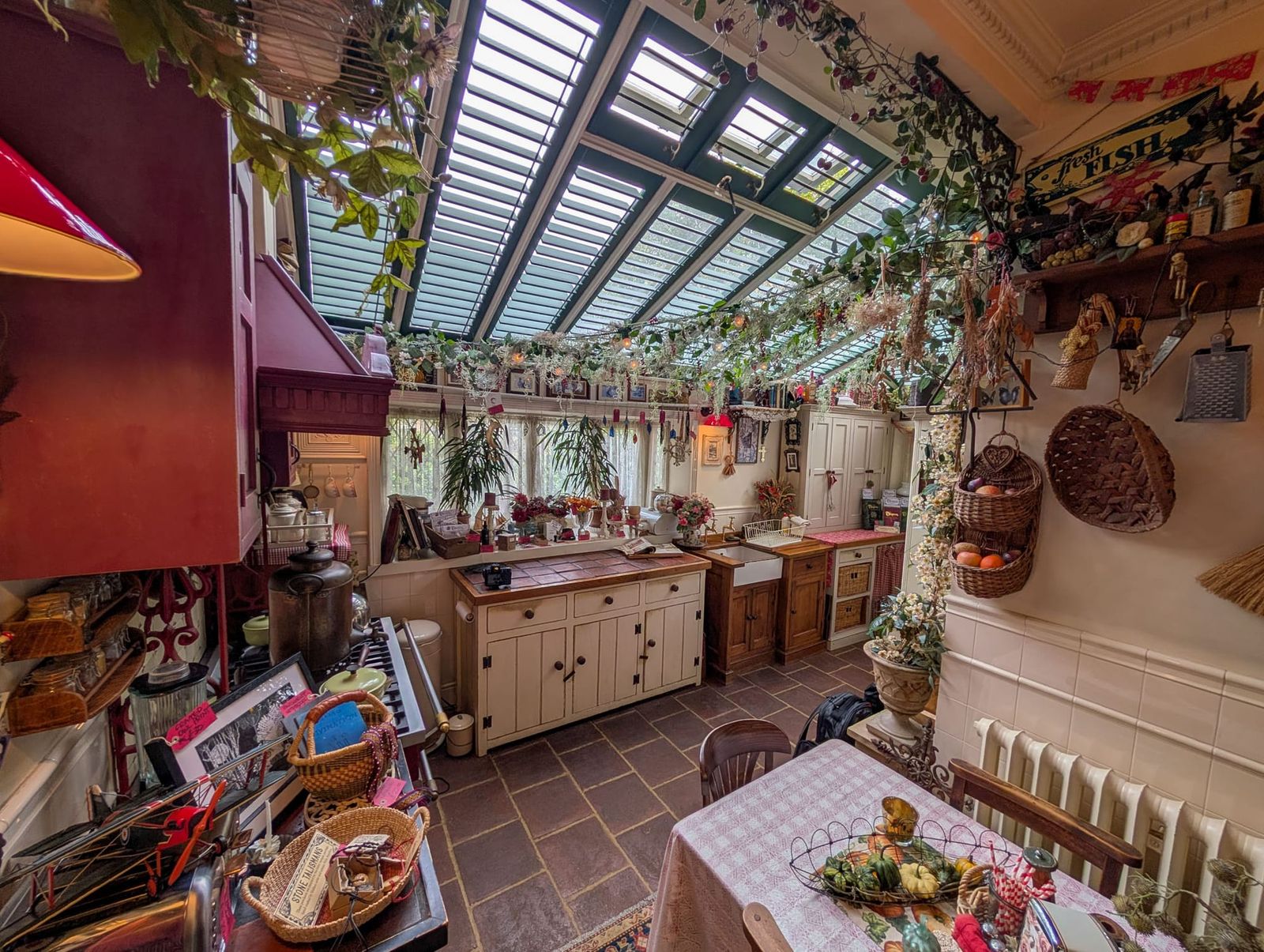
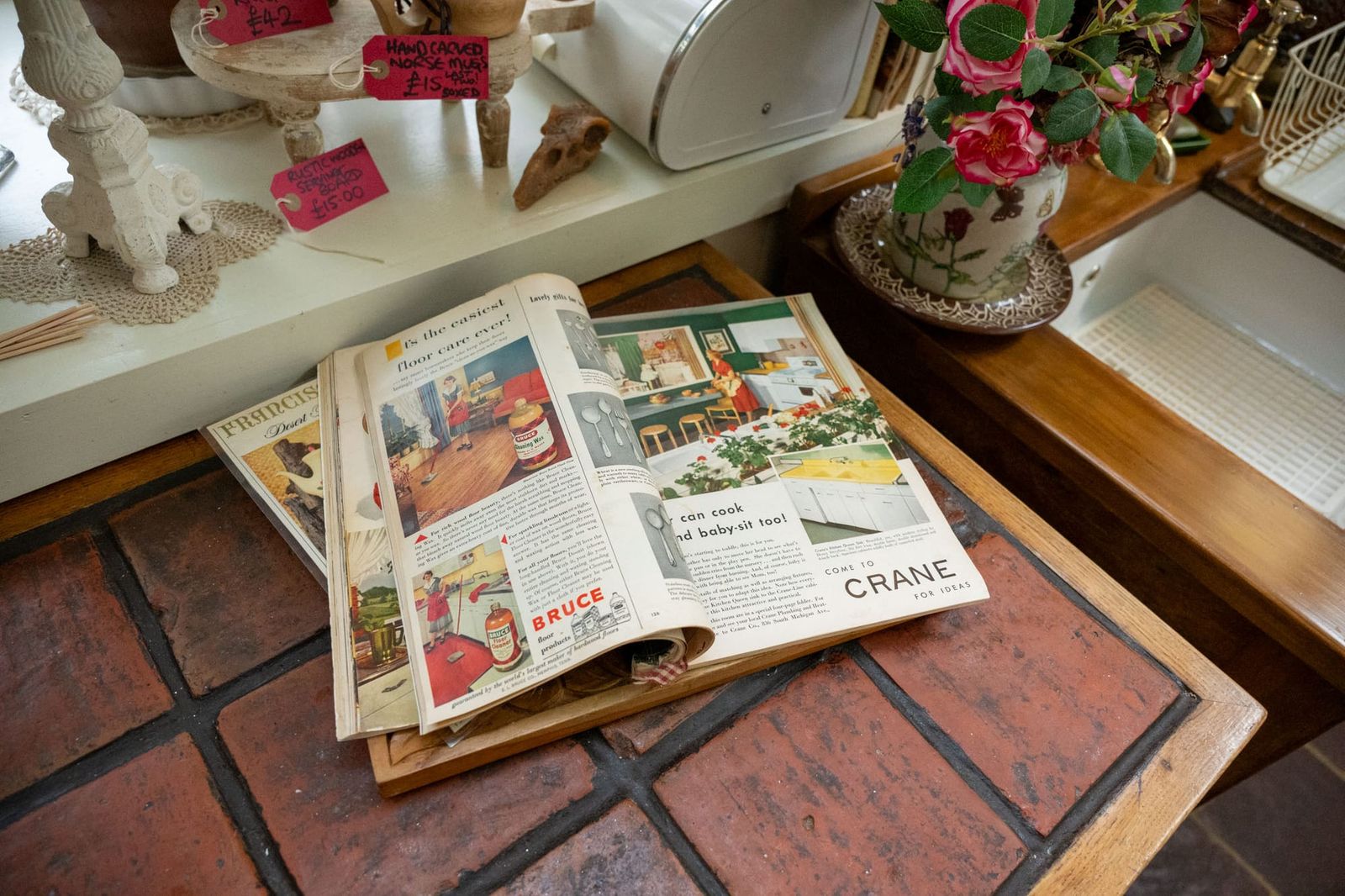
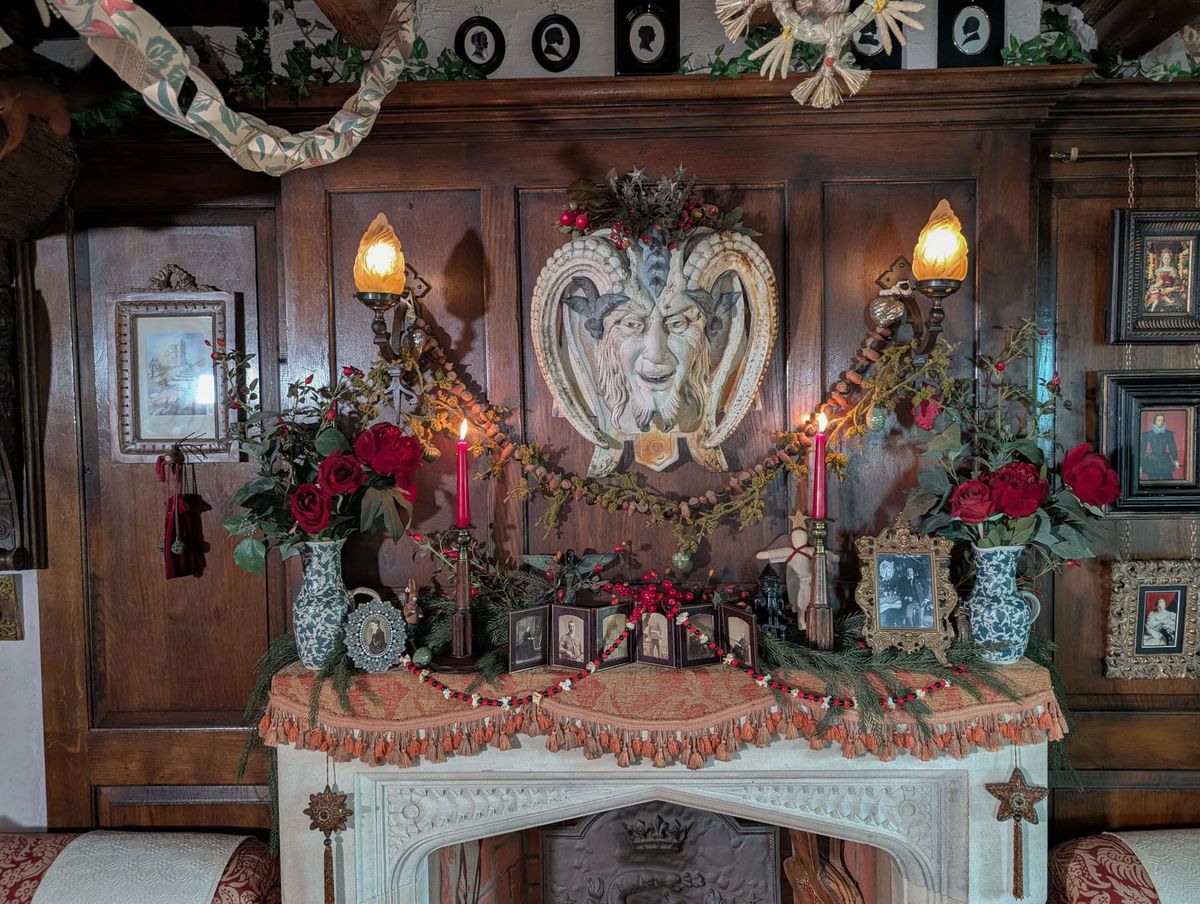
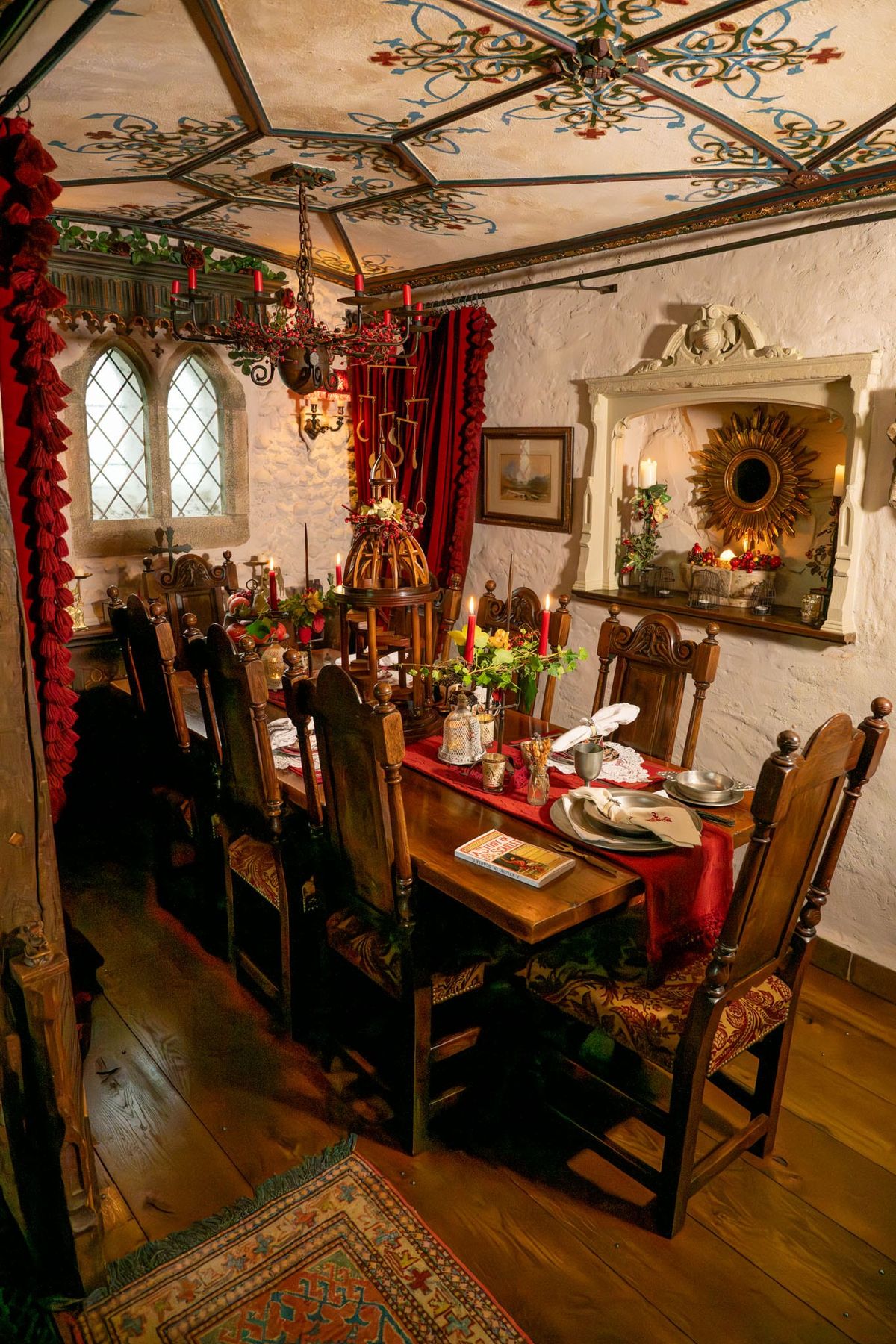
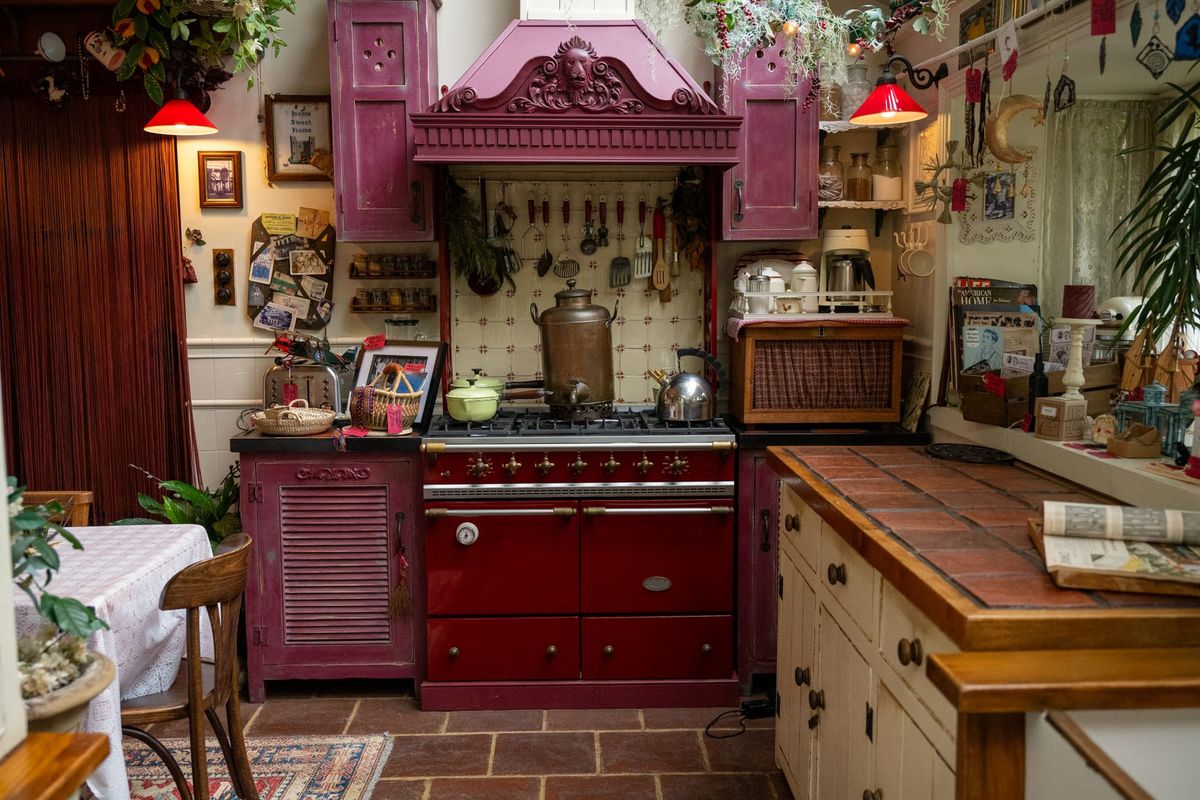
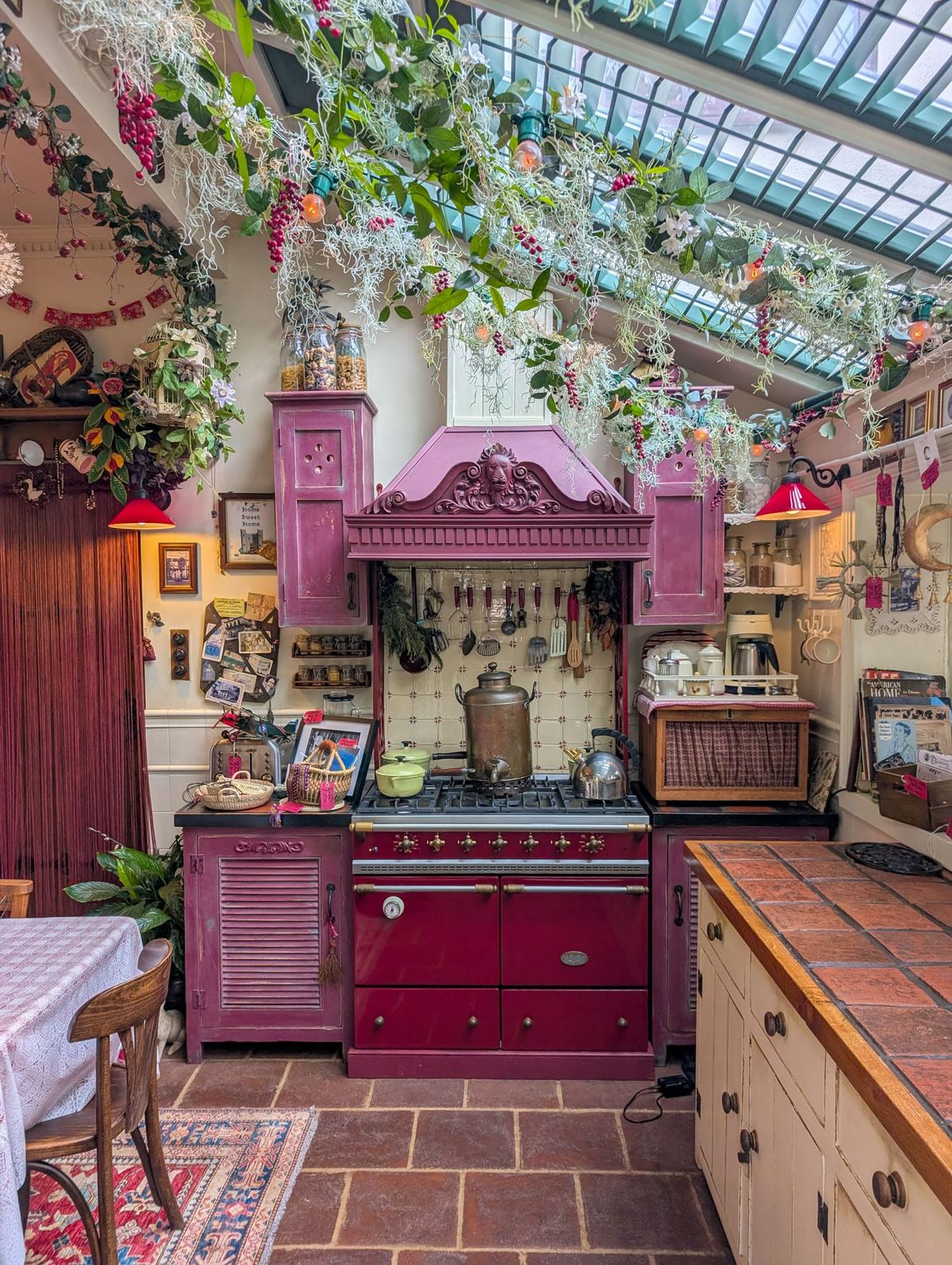
The kitchen, for example, is not simply a 1950s kitchen. It is his perfect place for Sunday morning breakfast. The main living and dining room is not merely a period room. It is a Victorian dining experience, layered with the atmosphere of old stone, electric light, Christmas, story and evening ritual. The office is not a styled study. It is the place where the writing self can appear.
In one room, John remembers sitting when it was still magnolia, with a 1970s carpet, imagining a table at which even fish and chips could feel like the best meal anyone had ever eaten. It is a wonderfully British measure of success: not luxury for its own sake, but the transformation of an everyday act into something memorable.
That is where Talliston becomes more than an extraordinary interiors project. It asks a question that many homes, however beautiful, never quite answer: does this room make life feel fuller?
“Home is the perfect moment: the point at which a room answers the life that will be lived inside it.”
John Tarrow, Talliston House & Gardens
Designing from feeling, not fashion
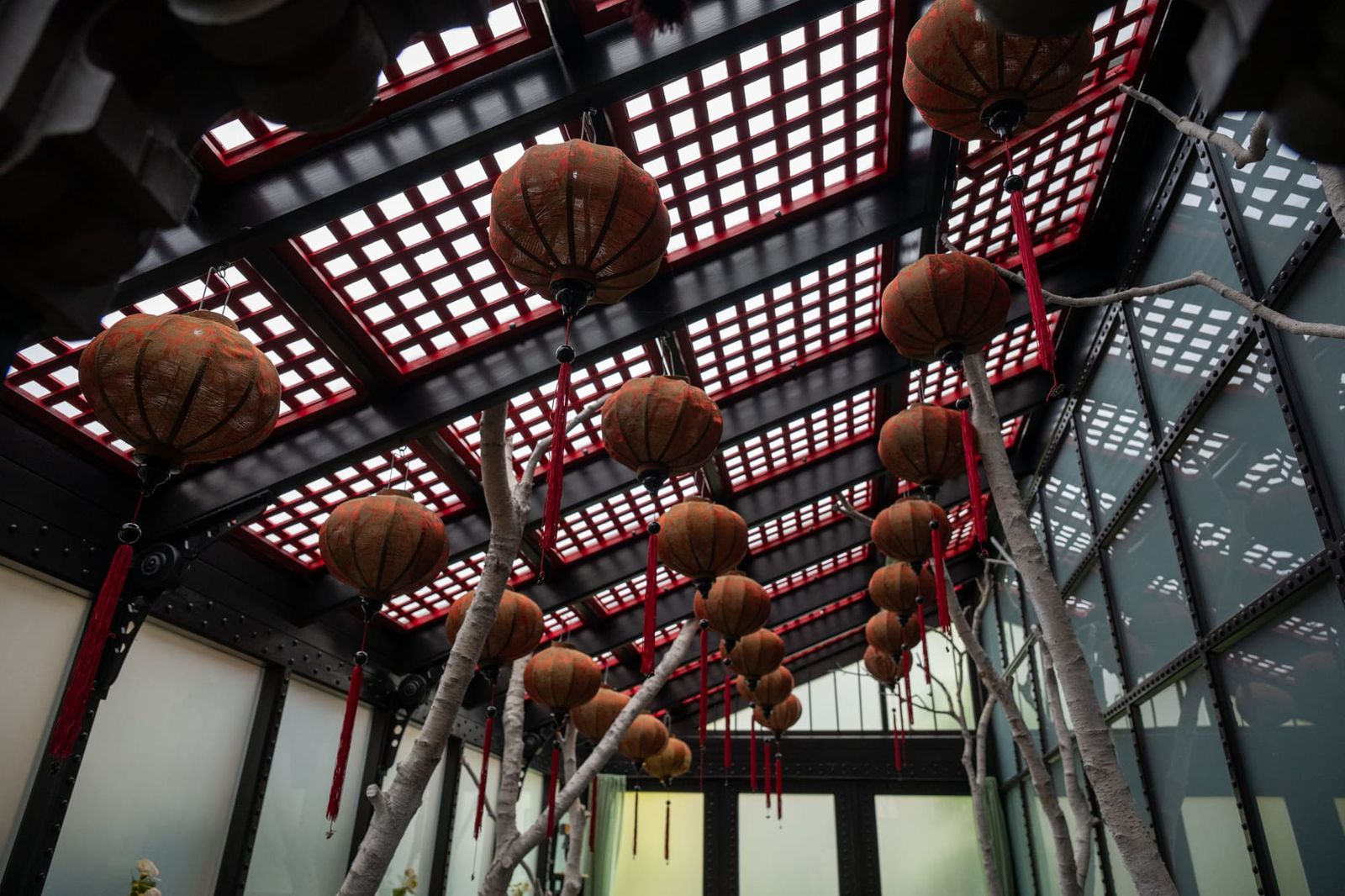
Talliston could easily have become a series of themed rooms. A Scottish castle here, a New Orleans kitchen there, a Japanese ship interior elsewhere. In lesser hands, the result might have felt like stage scenery. John is clear that this was never the aim. The rooms, he says, were never meant to feel like “a themed place”; they were meant to feel like “a real place”.
That required a different kind of discipline. The rooms were not copied directly from a single location. They were written, researched, gathered and built. As an author, John approached each space almost as he would approach a blank page. Who lived here? What year is it? What has happened before this moment? Which objects would have arrived recently, and which would have been there for decades? What would the room smell like? What would it sound like? What view should be hidden, and what view should be invented?
This is why the rooms have depth. A real house is never only one period. It carries what previous occupants left behind. It contains inherited objects, repairs, contradictions, practical compromises and things that have simply never been changed. John understood that an authentic interior does not look as if it has been assembled in one afternoon from a mood board. It looks as though time has passed through it.
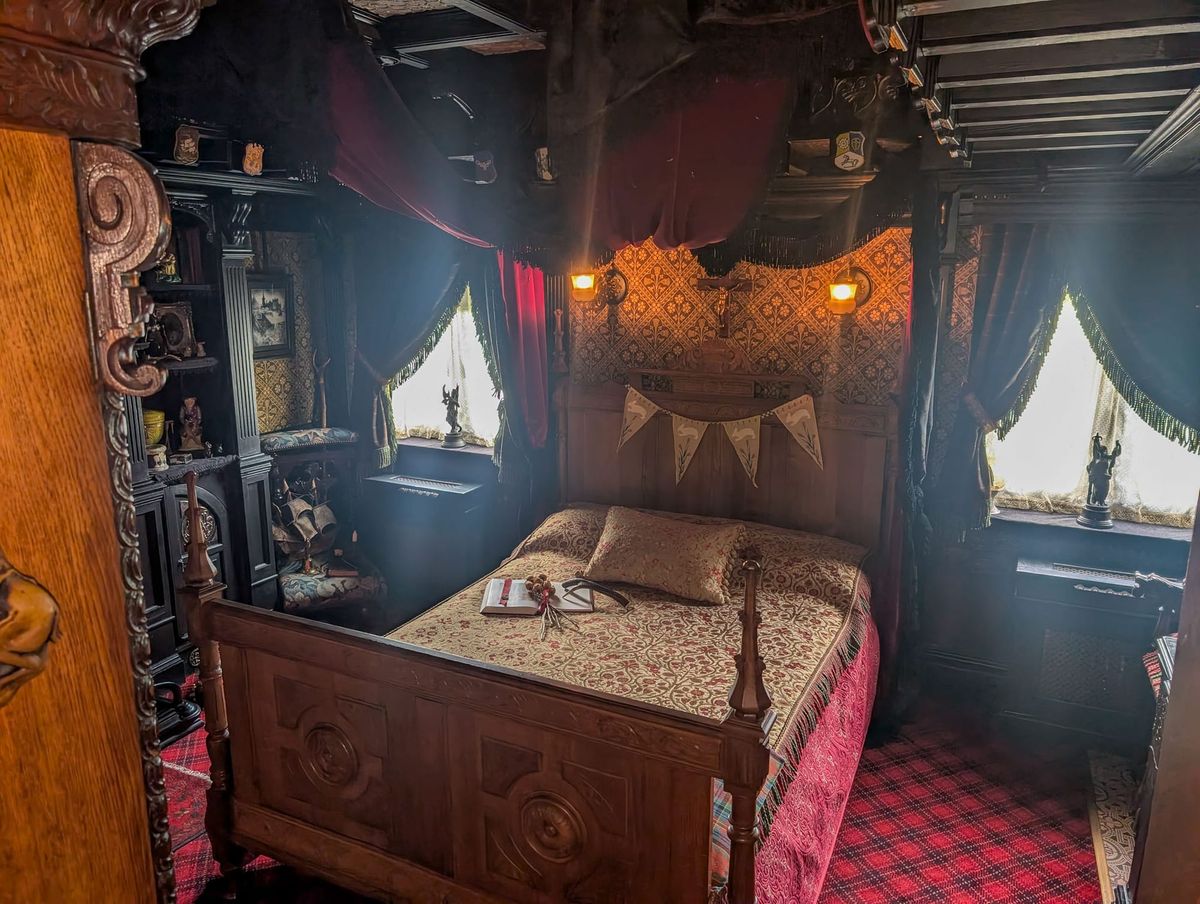
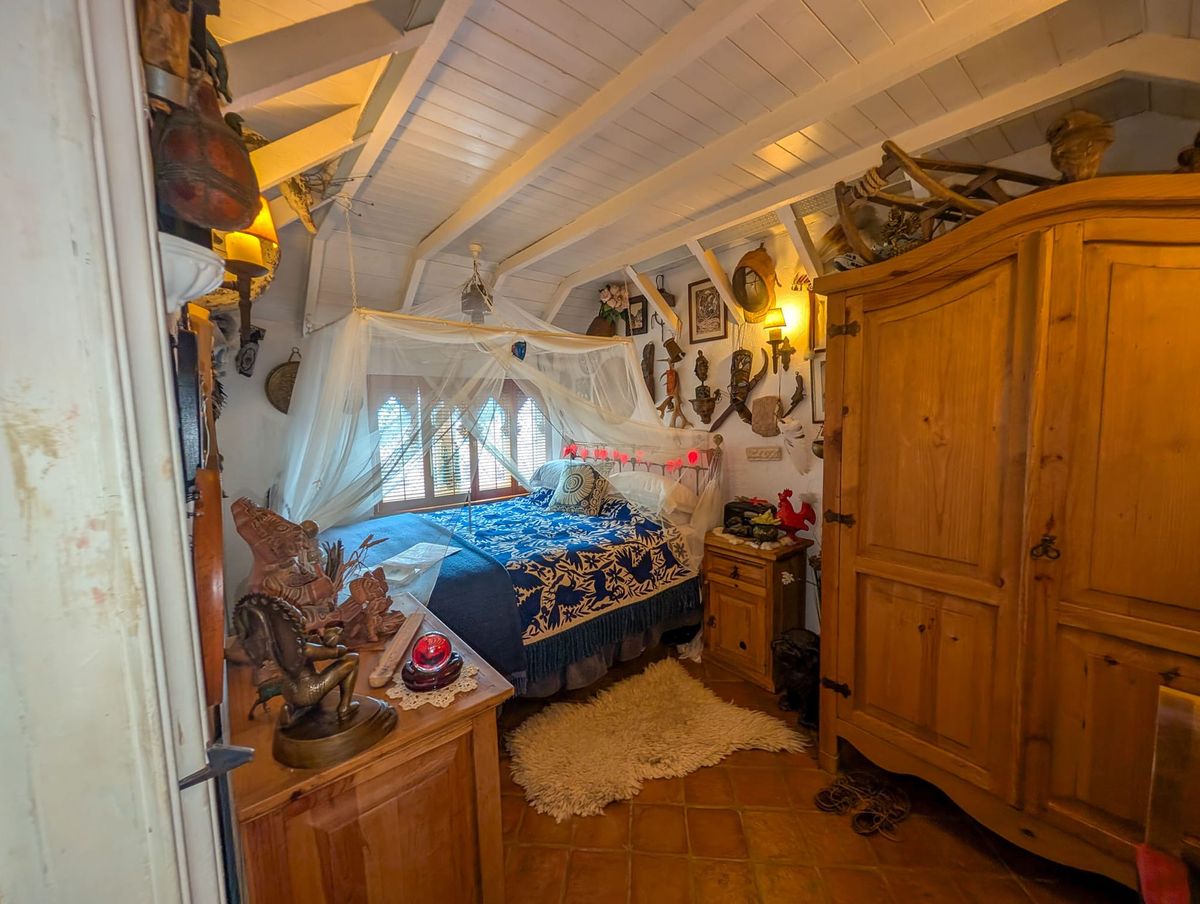
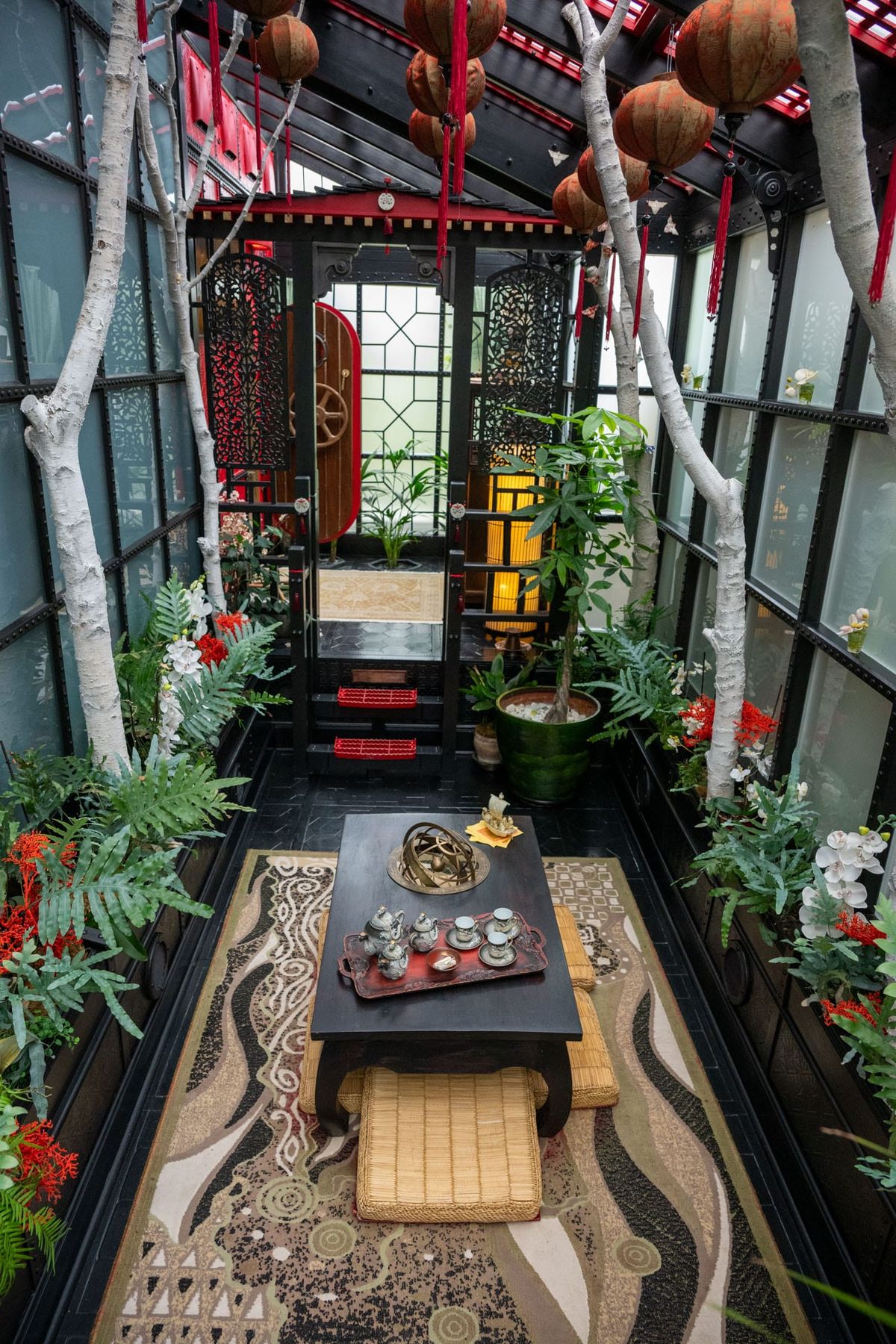
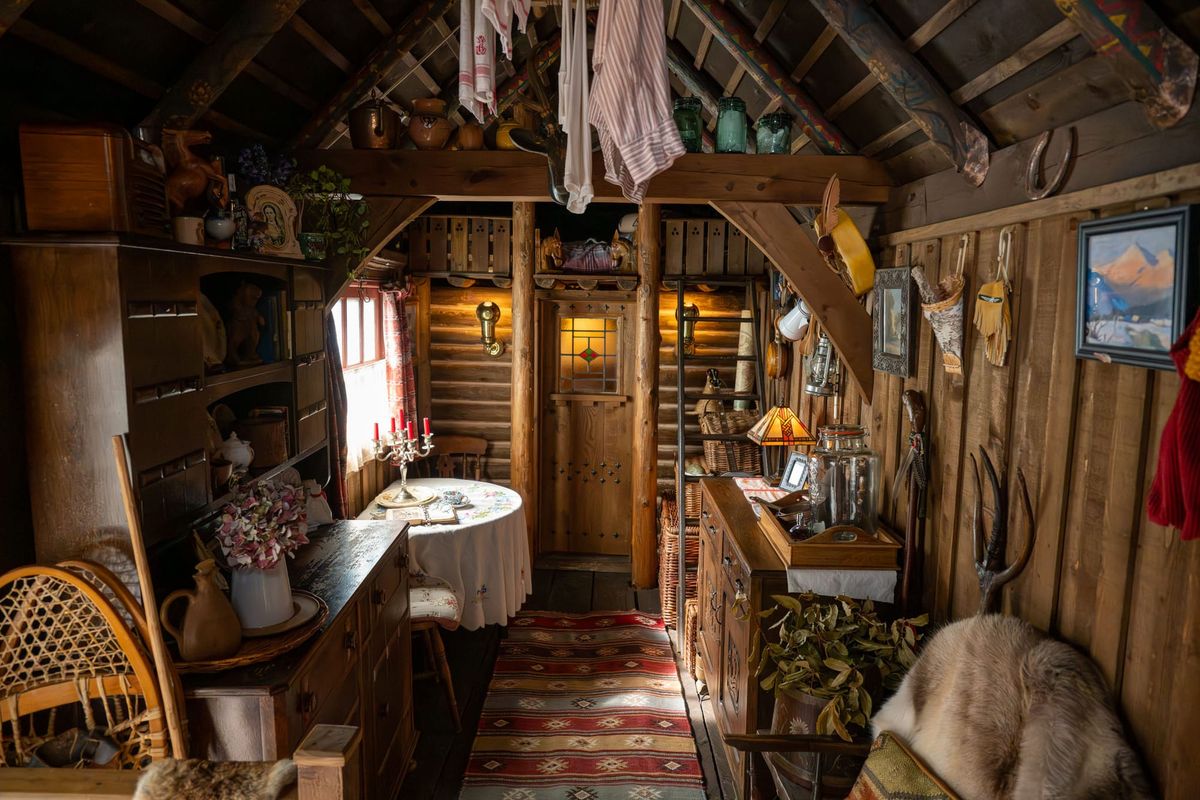
Across Talliston, the references are varied and exacting: a 1950s New Orleans servants' kitchen, a 1948 trapper's cabin in the Canadian wilderness, an Italian hallway, a Cambodian bamboo tree house, a Moorish guestroom at the Alhambra Palace, a Norwegian boathouse bathroom, a Japanese ship-inspired modern room and a Scottish room haunted by its own story.
Yet the house is not a catalogue of influences. It is one continuous imaginative act.
A house written like a novel
Perhaps the most distinctive thing about Talliston is that it behaves like a book. John is an author, and the house was created through narrative as much as construction. He describes sitting down to “write the rooms”, creating characters, places and moments before the physical work could fully begin. Each room has a setting, a backstory and, in many cases, its own cast. The entire house became a novelistic world, and later, the process came full circle when that world returned to the page.
This literary way of thinking also explains how the house is now cared for. Once complete, Talliston was photographed extensively, and the rooms have been held in that finished state. If something is moved, repaired or broken, it is returned to its correct place. Not because the house is a museum in the conventional sense, but because, as John explains, the words in a book do not change.
It is a persuasive analogy. When we open a novel again years later, the opening scene is still there. The character is still where we left them. The world waits for us in the same state, ready to be entered again. Talliston works in the same way. A visitor returning after several years should be able to step back into the same moment.
That precision gives the house its strange power. It is deeply personal, yet also carefully held for other people to experience. It is lived with, cared for, toured, maintained and shared, but it is not allowed to dissolve into casual change. Its stewardship is part of its meaning.
Objects with memory
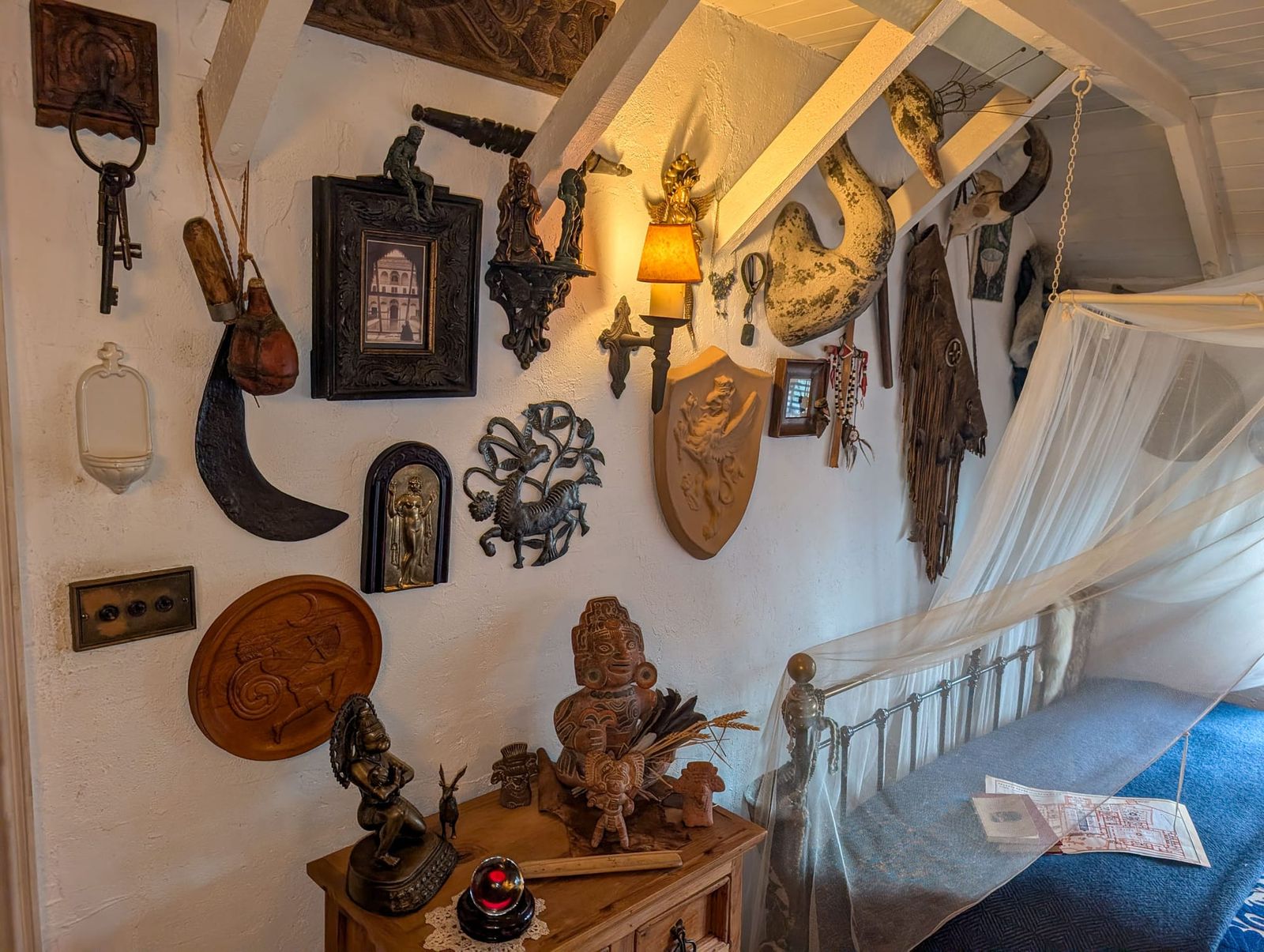
Talliston is full of objects, but not in the way a collector's house is full of objects. The pieces here are not merely acquired. They are remembered.
John gathered thousands of items from 47 countries while creating the house, and he speaks of being tied to them because, in his words, “every item in this house has a story”. These are not anonymous purchases gathered for effect. They are fragments of journeys, decisions, accidents, conversations and days that were recorded in travel journals. For the tenth anniversary, he brought those journals out, marked the relevant pages and allowed guests to read what he had been thinking and feeling on the day he first encountered certain rooms, places or objects.
That is a rare form of provenance. Not simply where something came from, but what it meant at the moment it was found. A chair, a tile, a piece of glass, a bowl, a book or a carved panel can hold more than period accuracy. It can hold a memory of looking, choosing, carrying, imagining and bringing home.
In many houses, objects are arranged to show taste. At Talliston, they are arranged to hold a world together.
The rooms beyond the room
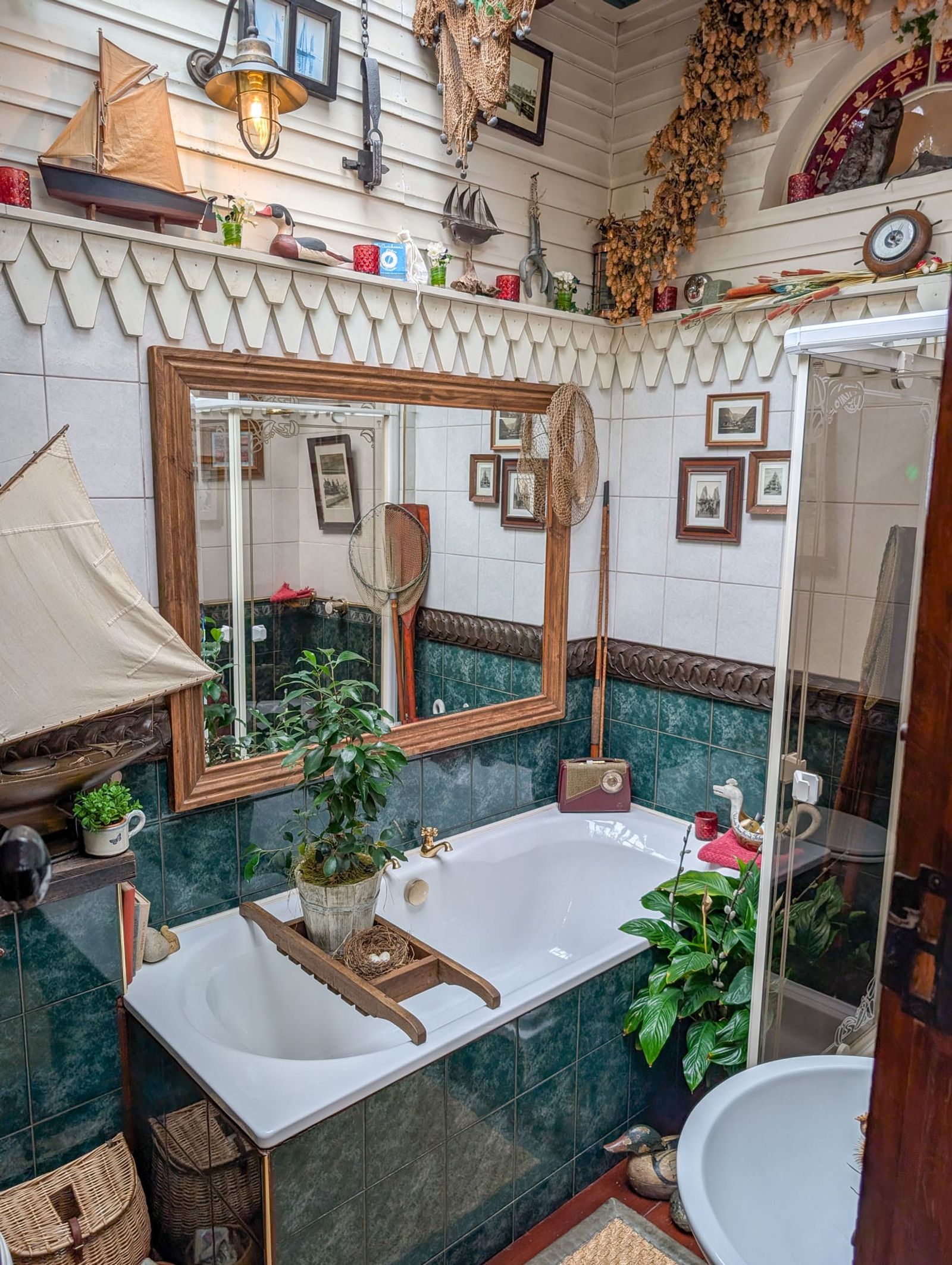
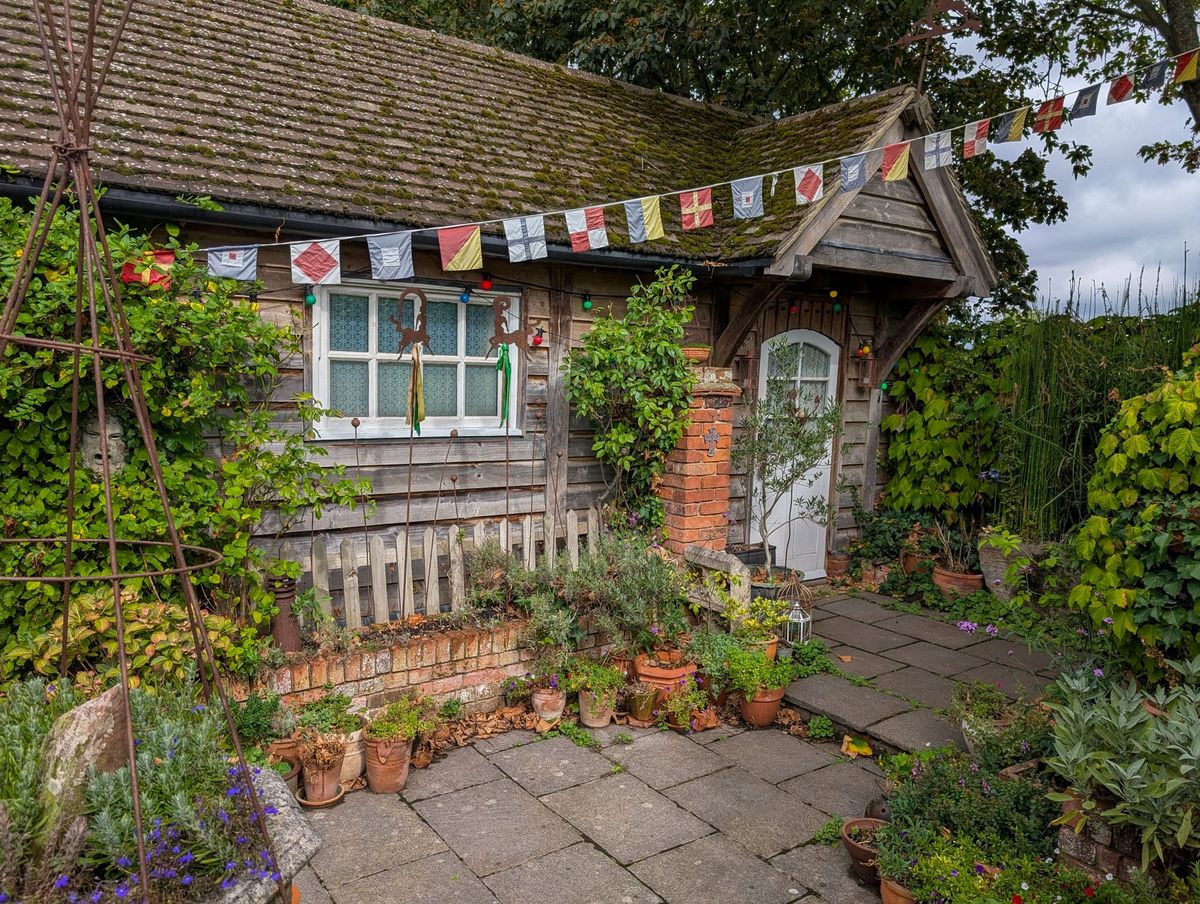
Part of the pleasure of Talliston is the way it defeats expectation. A room can be physically small and emotionally vast. A cabin can be ten feet from the house and still feel as if it belongs to the Canadian wilderness. A bathroom can become a Norwegian boathouse because planning permission would not allow the boathouse to be built outside. A conservatory can remove the neighbour's fence by refusing the view altogether.
These are acts of imagination, but also of careful domestic problem-solving. The house repeatedly takes an ordinary limitation and turns it into part of the story. There is no room for a Scottish castle, so a tower in Wales and a Victorian dining room become the route in. There is not enough height for an atrium, so the floor goes down. There is no view, so a different kind of enclosure is made.
This is where Talliston feels especially relevant to how people live in real homes. Most of us are constrained by rooms that already exist, budgets that are real, neighbours who are nearby, planning rules, storage needs, roofs, wiring, windows and the ordinary facts of domestic life. John did not remove those constraints. He worked through them.
The result is not escapism in the sense of leaving home behind. It is the opposite. It is a form of returning home more fully, by making the available house answer a deeper desire.
The house as a living, breathing world
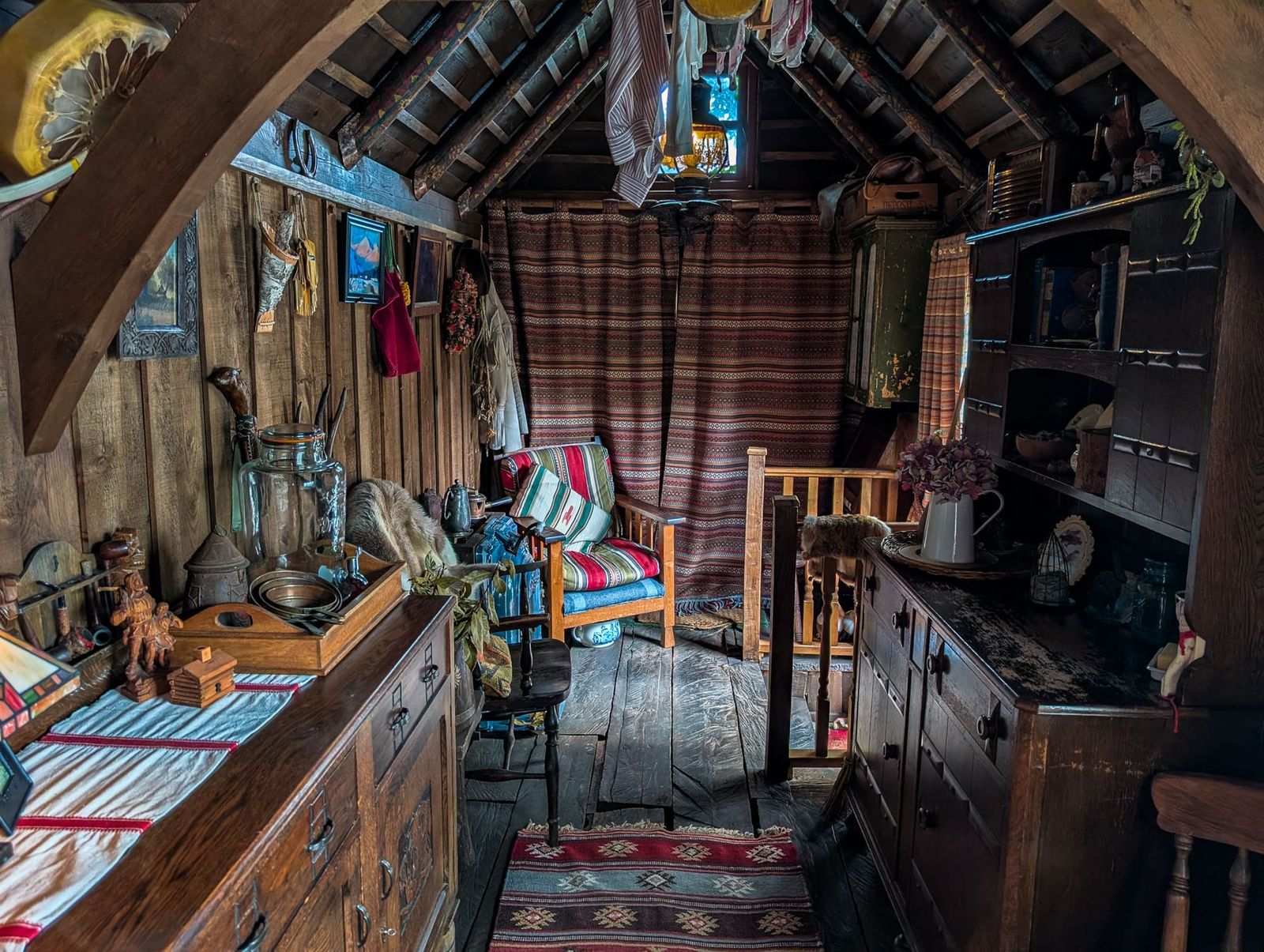
Although Talliston is held with the care of a completed book, it is not inert. John speaks of sharing the house as the thing that has given the project depth, because it is only when people step inside that it becomes, as he puts it, “a living, breathing world”. Visitors react to the rooms emotionally. They laugh, hesitate, lean in, become unsettled, remember something, imagine something, or begin to question what their own home might become.
That response matters. John says the house now means more to him than it did when he was building it because he can see the effect it has on people. The point is not that visitors should all embark on a 25-year transformation of their own. It is that they might leave asking a more useful question. Why can't I create something that makes my own world feel better?
There is a line in the interview that sits at the centre of the whole story. John explains that changing the world felt too large a task, but changing his world seemed possible. That is what Talliston represents: not a retreat from reality, but a complete reworking of the immediate world within reach.
It is a deeply domestic form of optimism. The house becomes proof that imagination need not remain abstract. It can be built into stairs, tiles, cupboards, glass, scent, light, timber, gardens and the daily ritual of coming home.
What home means at Talliston
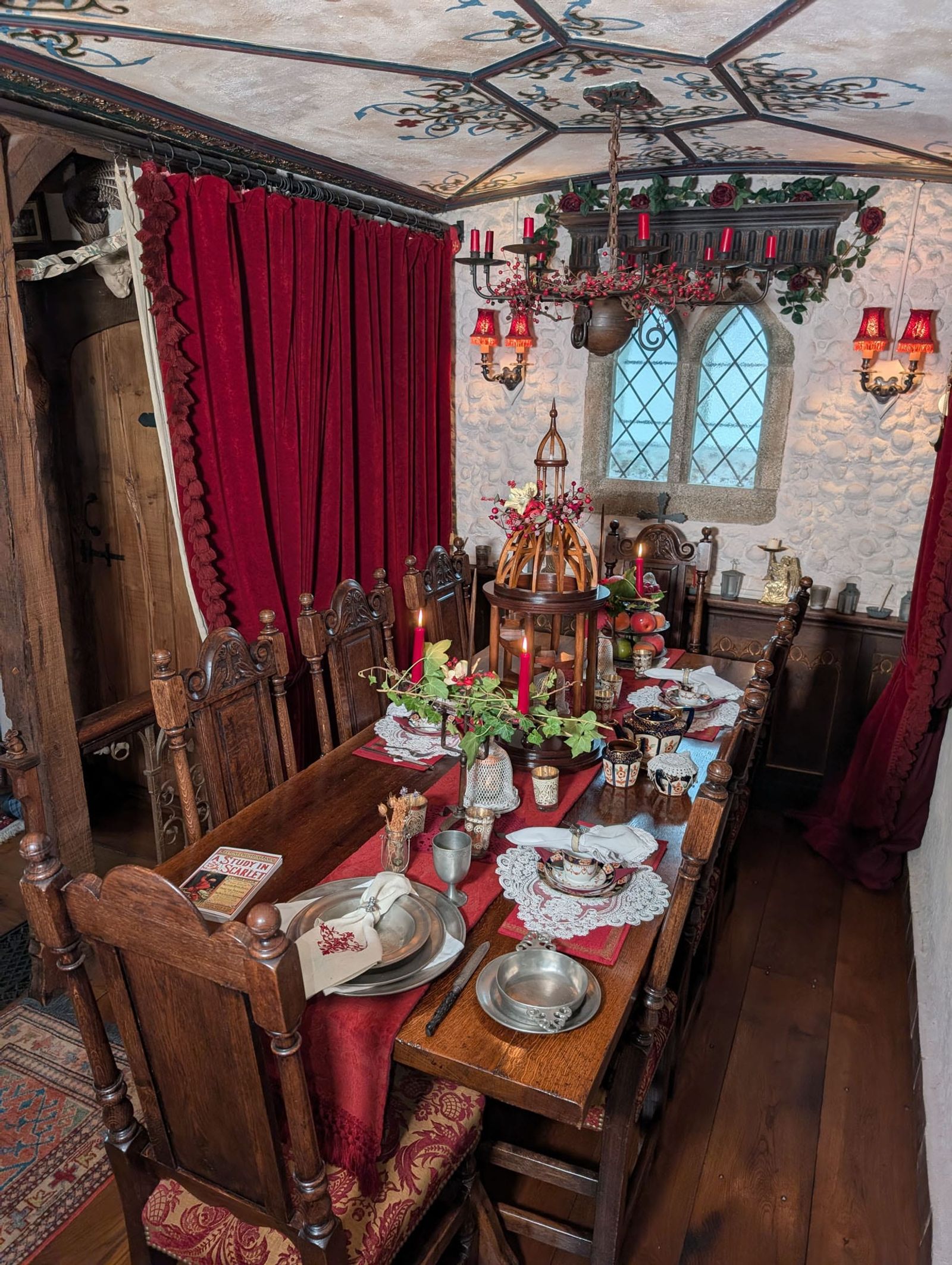
Home, at Talliston, is not ordinary comfort. Nor is it grandeur. It is the condition of being surrounded by places that answer something inward. A room can steady you. A room can invite you to work. A room can make breakfast feel like ceremony. A room can hold childhood fears, adult ambitions, travel memories, invented characters and the traces of a person becoming who they meant to be.
John says the idea at the heart of the project was to create “a place you always want to come back to”. That is the simplest definition of home and perhaps the best. After travelling widely and building rooms inspired by places across the world, he still wants to return to this house in Essex. In fact, he jokes that it has rather spoiled hotels for him. Beds and baths elsewhere are measured against Talliston, and often found wanting.
That might be the clearest evidence of success. The house has not become less of a home because it is extraordinary. It has become more of one. Its imagination has not made it unliveable. It has made it magnetic.
In the end, Talliston asks something generous of the reader and the visitor. Not that we copy it. Not that we turn every room into a world of its own. Not that we abandon practicality for fantasy. It asks us to notice how our homes make us feel, and whether they could make us feel more alive.
A house, after all, is not only the place where life happens. At its best, it helps life become more vivid.
Visiting Talliston House & Gardens
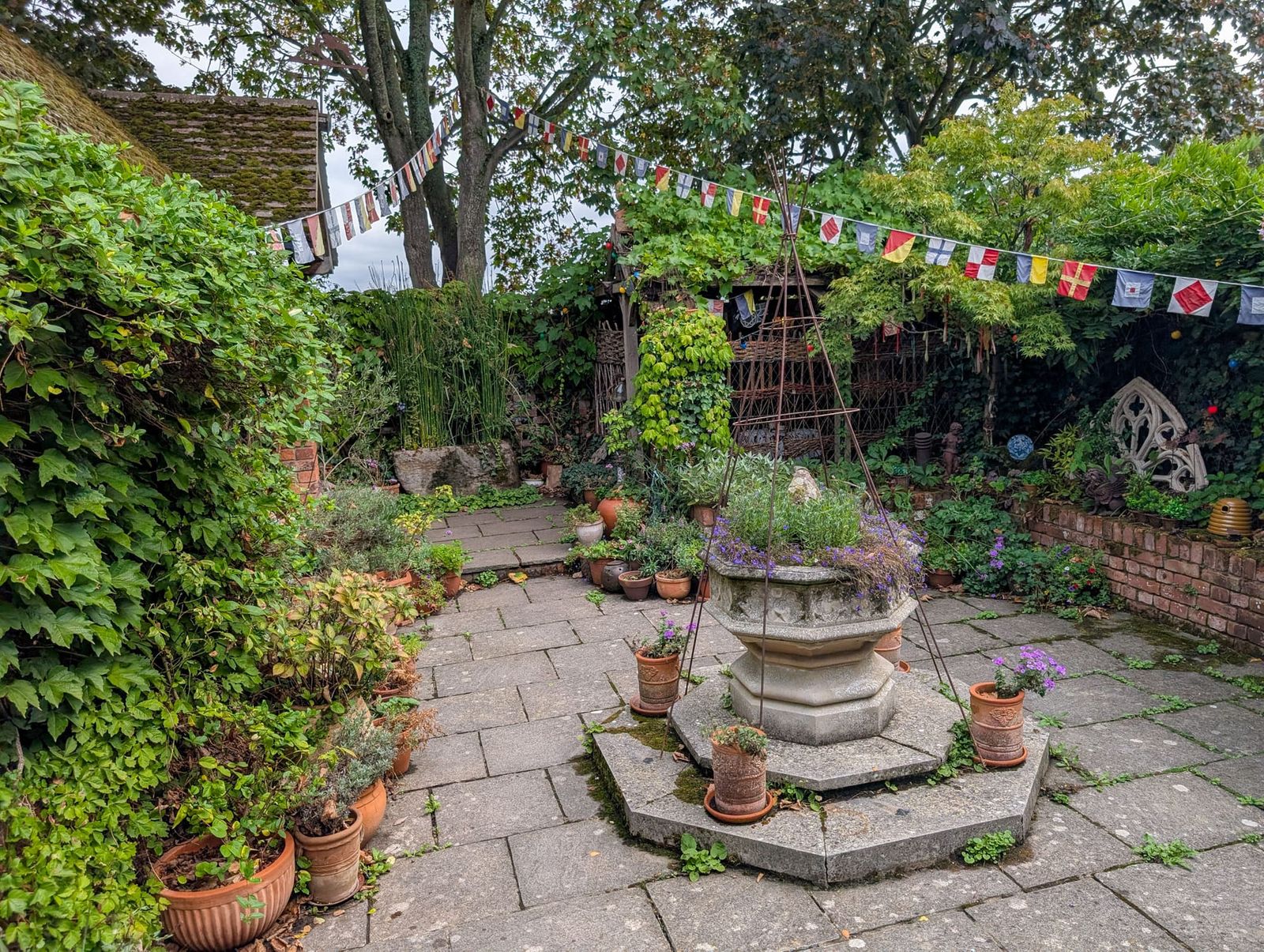
Talliston House & Gardens is located in Great Dunmow, Essex. The house and gardens offer guided tours and selected experiences, with current details available through the official Talliston website.
For those interested in extraordinary British homes, immersive interiors, creative restoration and the emotional meaning of home, Talliston is unlike almost anywhere else. It is not simply a house to look at. It is a house to read, room by room.
And perhaps that is why it lingers. Because behind the astonishing detail, the travel, the craftsmanship and the years of work, the central idea is one that belongs to every home: the wish to create a place you cannot imagine not coming back to.
Inside Talliston, room by room
Frequently asked questions
What is Talliston House & Gardens?
Talliston House & Gardens is an extraordinary home in Great Dunmow, Essex, created by John Tarrow. It began as an ordinary three-bedroom semi-detached house and was transformed over 25 years into a series of immersive rooms and gardens, each set in a different time and place.
Who created Talliston House & Gardens?
Talliston House & Gardens was created by author John Tarrow. The project began with a single room: his ideal place to write.
What is Talliston House known for?
Talliston House is known for transforming an ordinary Essex house into an extraordinary series of rooms and gardens inspired by different locations, periods, stories and feelings.
What does Talliston House say about the feeling of home?
Talliston suggests that home is not only where we live, but how a place makes us feel. John Tarrow built the house around imagined perfect moments, from writing and dining to breakfast and retreat.
Can you visit Talliston House & Gardens?
Talliston House & Gardens offers guided tours and selected experiences. Check the official Talliston website for current visitor information, availability and booking details.
Read more from The Hearth.
Talliston House & Gardens collaborated with the House of Willow Alexander on this feature. See Talliston House & Gardens for yourself, including current tours and experiences: talliston.com